
Snoring & sleep apnea
The DISE protocol — before any decision on snoring surgery
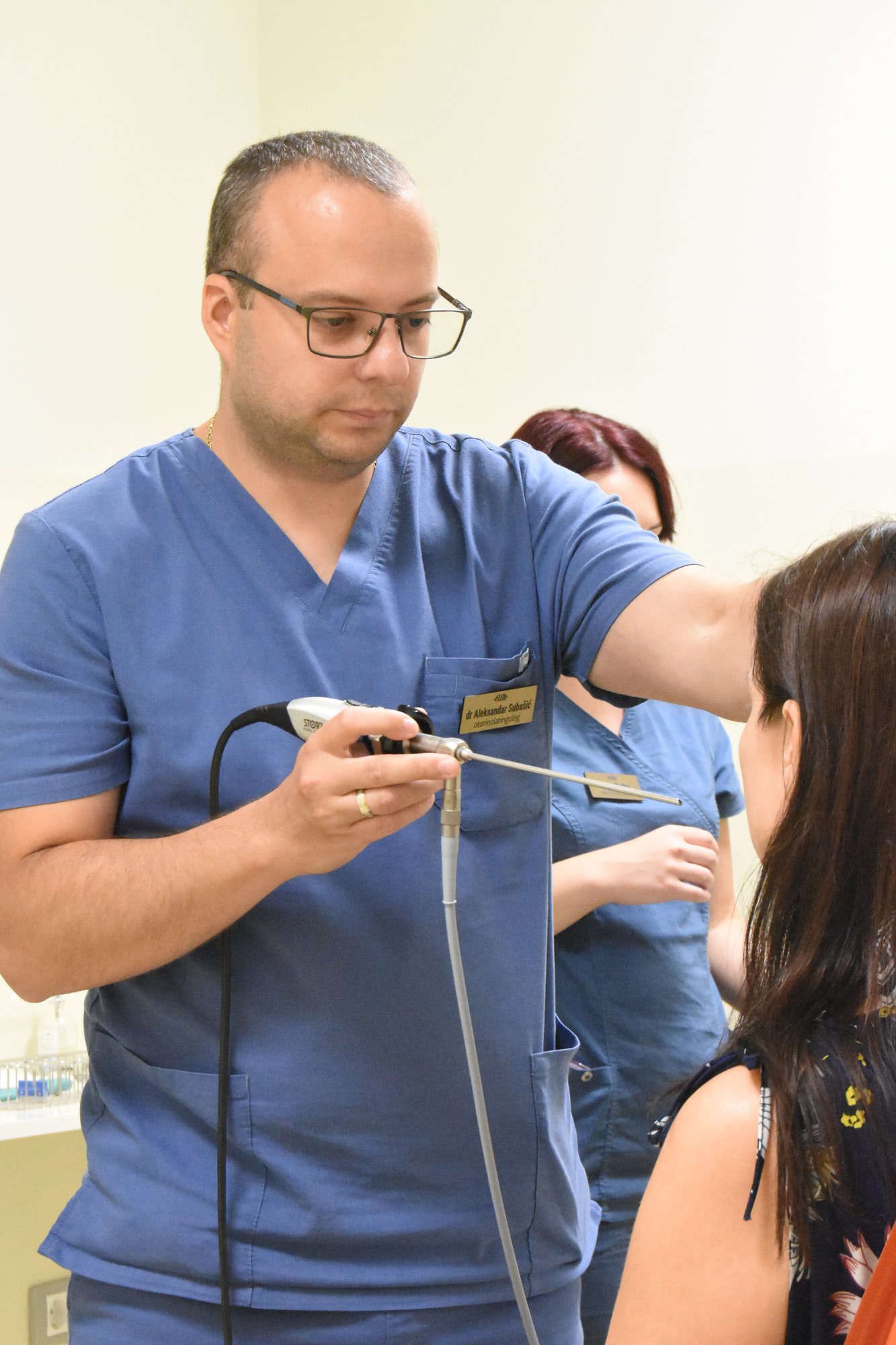
The airway can collapse at several levels: soft palate, base of tongue, epiglottis. A standard awake exam cannot see it. DISE (Drug-Induced Sleep Endoscopy) shows where it closes — before any treatment decision is made.
DISE
protocol
Our own
operating room
23 years
of ENT practice
Three ENT
specialists
Why we snore — and when it becomes dangerous
Snoring is the sound produced when soft tissues in the airway vibrate — during sleep, muscles relax, the passage narrows, and air whistles through. Obstructive sleep apnea (OSA) is a more severe variant — breathing stops completely for 10+ seconds, repeatedly throughout the night. Long-term, this raises the risk of hypertension, stroke, heart attack, and diabetes.
Not sure?
Take the STOP-BANG questionnaire online
The validated tool we also use in our clinic. 8 questions, 2 minutes — get your obstructive sleep apnea risk score immediately.
Take the test →Symptoms that point to sleep apnea
During sleep
- Loud snoring that disturbs your partner
- Breathing pauses your partner notices
- Sudden jerks, choking or gasping in sleep
- Frequent waking, sweating, racing heart
During the day
- Waking up tired, unrested
- Morning headache
- Daytime sleepiness, falling asleep at the wheel or at work
- Reduced concentration and memory
Long-term risks
- Drug-resistant high blood pressure
- Arrhythmias and increased heart-attack risk
- Type 2 diabetes and metabolic syndrome
- Depression and low libido
DISE — drug-induced sleep endoscopy
Endoscopy in controlled sleep — we see exactly where it closes
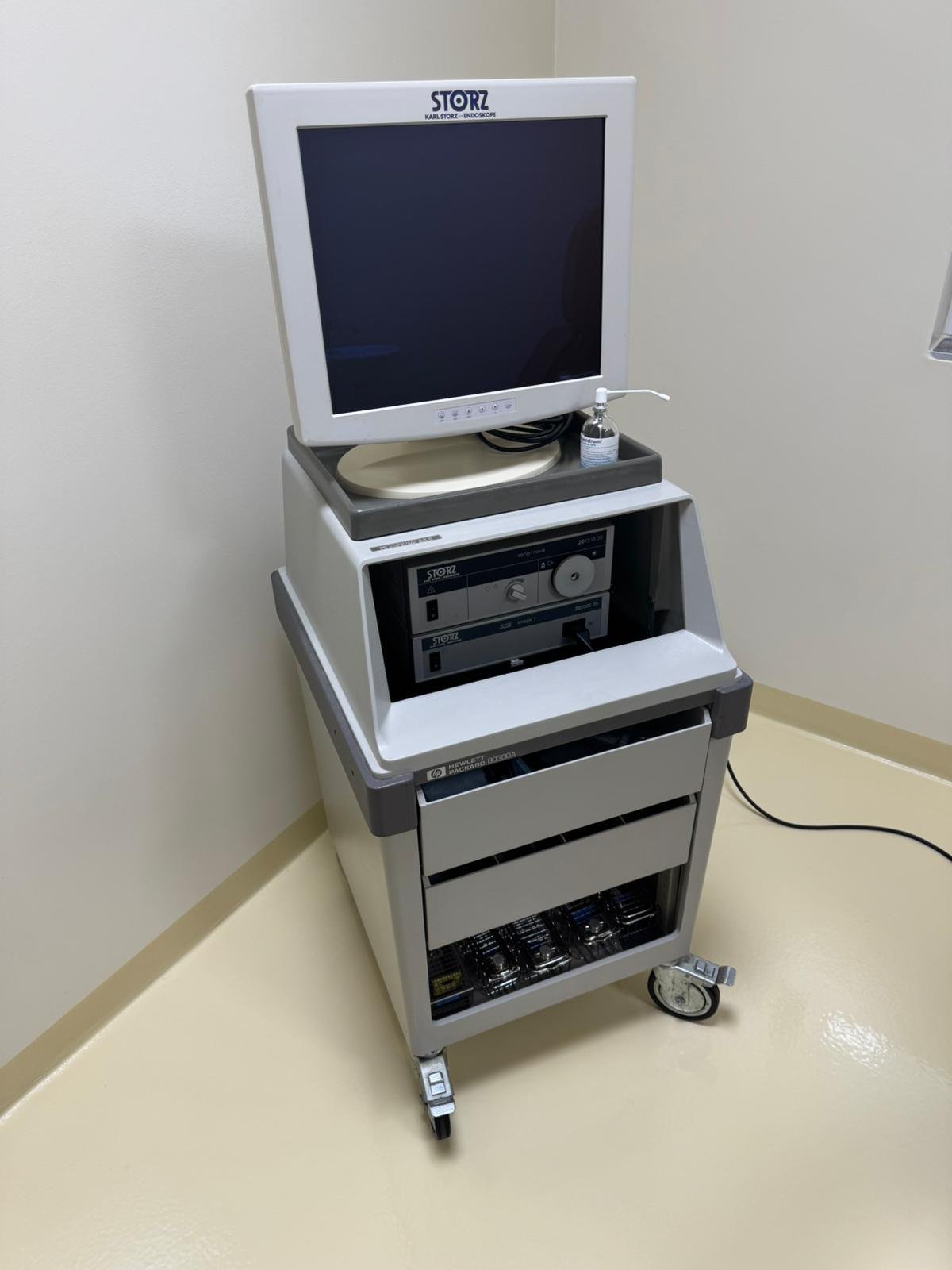
DISE is a diagnostic protocol in which the patient is brought into controlled sleep under an anesthesiologist’s supervision, and a flexible endoscope is then used to directly observe where and how the airway collapses — at the soft palate, lateral pharyngeal walls, base of tongue, or epiglottis. This is the only way to objectively see the mechanism of obstruction before a treatment decision is made.
A standard tonsillectomy or uvulopalatoplasty will not help if the real problem is at the base of the tongue or the epiglottis. DISE allows us to see this before surgery — and avoid an operation that would not solve the problem.
Four levels at which the airway can collapse
The VOTE classification — Velum (soft palate), Oropharynx, Tongue base, Epiglottis.
V — Soft palate (velum)
The most common level. Vibration of the soft palate produces classic snoring. Treatment may include palatoplasty or other procedures.
O — Lateral pharyngeal walls
The lateral walls collapse inward during sleep. Often associated with enlarged tonsils. Treatment depends on the combination of factors and how much space is available.
T — Base of tongue
Often the “hidden” cause of severe apnea — the tongue falls back during sleep. Classic palatal procedures will not help. Targeted treatment for the tongue base is required.
E — Epiglottis
The epiglottis flips backward and closes the entrance to the larynx. Without DISE, this level is almost impossible to diagnose. Treatment approach changes accordingly.
Why DISE changes the game
Three key advantages of the DISE protocol
Direct view into sleep
A standard awake exam cannot show what happens during sleep. DISE simulates sleep and records the obstruction in real time.
A personalized plan
The treatment plan is based on an accurate finding — not an assumption. Different levels of obstruction need different approaches, and DISE makes that distinction clear.
Avoiding unnecessary surgery
Patients have undergone uvulopalatoplasty for apnea that turned out to be at the base of the tongue. DISE protects the patient from the wrong intervention.
What a DISE examination looks like
1
Preparation
Standard preparation for any procedure under general anesthesia — anesthesiology consultation and medical history review.
2
Controlled sleep + endoscopy
The anesthesiologist brings the patient into controlled sleep. The ENT specialist introduces a flexible endoscope through the nose and records the obstruction. Duration ~15–25 minutes.
3
Findings & treatment plan
After waking and a brief rest — a detailed explanation of what was seen on the recording, the VOTE classification, and a concrete treatment plan.
Anesthesia for DISE
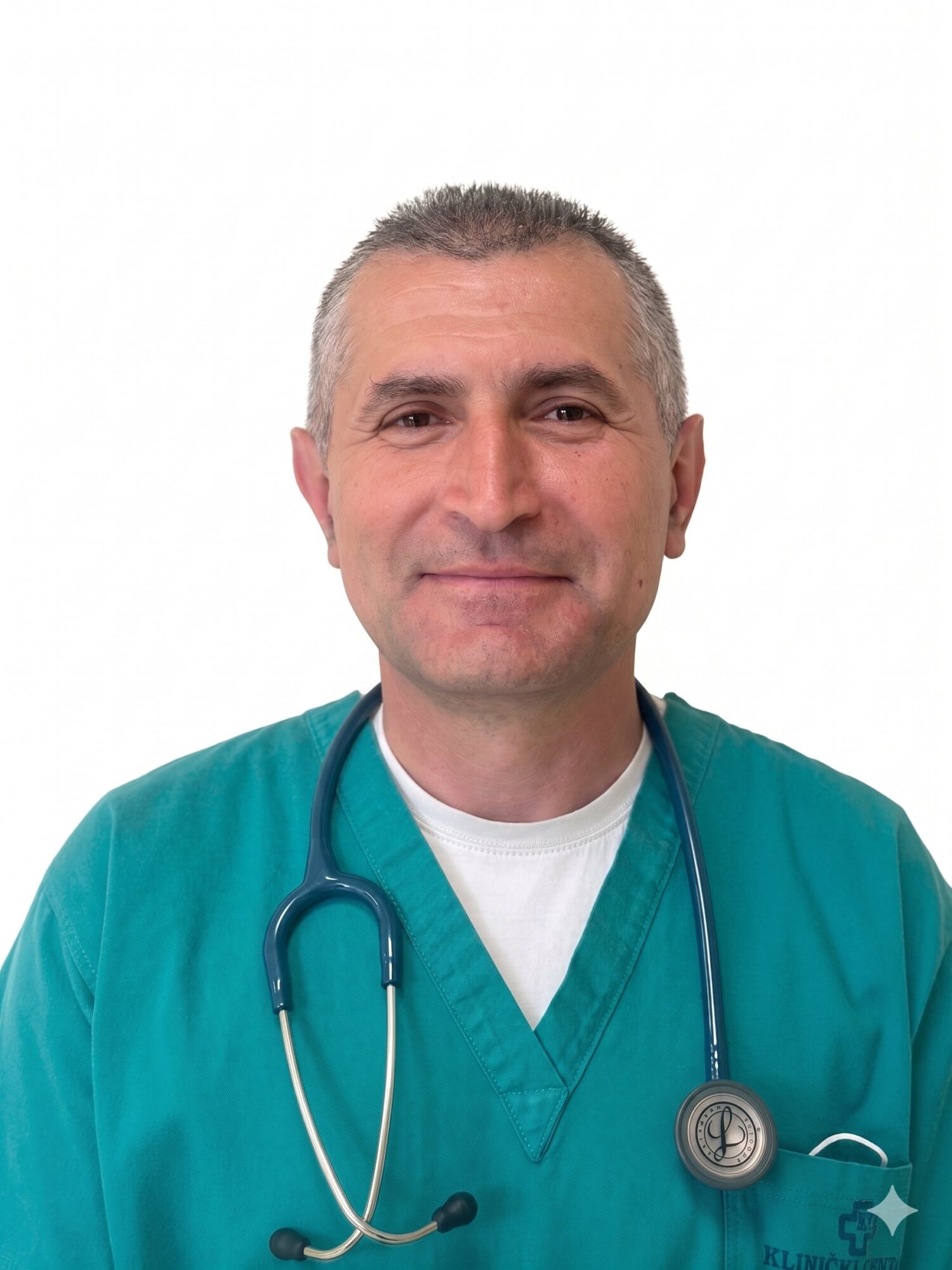
Dr. Zoran Gavrić
Anesthesiologist · subspecialist in pediatric anesthesia
DISE requires precise control of sedation depth — deep enough to simulate sleep with characteristic obstruction, yet safe and controlled. Dr. Gavrić titrates the sedative and monitors the patient throughout the entire protocol.
- Before the procedure — examination, medical history, risk assessment
- During DISE — continuous monitoring and sedative titration
- After — supervised recovery in our on-site recovery suite
Recovery
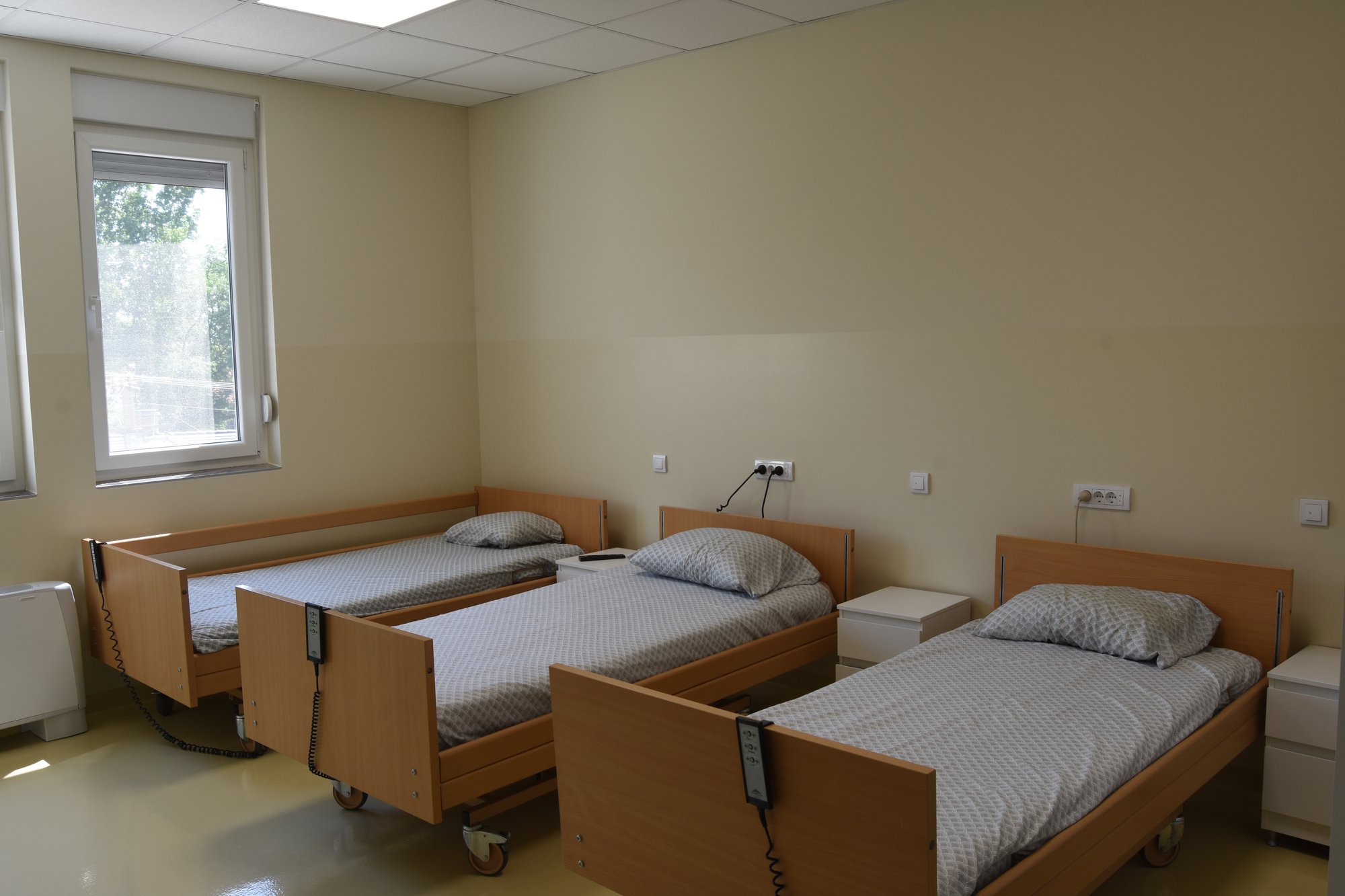
A recovery suite after DISE and other surgical procedures
After a DISE examination or a surgical procedure, the patient spends time in our recovery suite — we monitor waking, vital signs, and decide when it is safe to go home. A comfortable room with a bed, windows, and space for a partner or friend to wait with the patient.
Frequently asked questions about DISE and sleep apnea
Does snoring always mean sleep apnea?
No. Many people snore without serious apnea. But if snoring is accompanied by breathing pauses, daytime sleepiness, or morning headaches — the likelihood of apnea is high and diagnostic workup is needed (polysomnography + ENT examination, and DISE when indicated).
What is polysomnography (PSG) and how does it relate to DISE?
PSG is a sleep-laboratory study that quantifies apnea — how many times per night the patient stops breathing. DISE is anatomic diagnostics — it shows where the obstruction happens. They are complementary: PSG tells us “how severe”, DISE tells us “what to do”.
Is DISE painful or risky?
The patient is in controlled sleep and feels nothing during the procedure. The anesthesiologist continuously monitors vital signs. It carries no more risk than any other brief procedure under general anesthesia. There is no pain afterward.
I can’t tolerate CPAP — what now?
CPAP is the gold standard for moderate-to-severe apnea, but around 30–40% of patients are unable to use it consistently. For them, DISE is a crucial next step — it shows whether a surgical solution is possible and which one. There’s no need to give up on treatment — DISE often finds a path forward.
Can I get rid of snoring by losing weight alone?
Often yes. Even a 5–10% reduction in body weight significantly reduces snoring and mild apnea in patients with elevated BMI. But if the problem persists after weight loss, or there’s an anatomic obstruction (tonsils, base of tongue, deviated septum), weight loss alone will not be enough.
Can a child have sleep apnea?
Yes, and more commonly than people think — usually due to enlarged tonsils and adenoids. Symptoms: snoring, mouth breathing, restless sleep, sweating, attention problems at school. We treat pediatric apnea with a dedicated protocol — see also the “Pediatric ENT” page.
Snoring? Before you decide on anything — find out where the problem is
Consultation, ENT examination, DISE protocol — get in touch however suits you.
Snoring? Before you decide on anything — find out where the problem is
Consultation, ENT examination, DISE protocol — get in touch however suits you.

Snoring & sleep apnea
The DISE protocol — before any decision on snoring surgery
The airway can collapse at several levels: soft palate, base of tongue, epiglottis. A standard awake exam cannot see it. DISE (Drug-Induced Sleep Endoscopy) shows where it closes — before any treatment decision is made.
DISE
protocol
Our own
operating room
23 years
of ENT practice
Three ENT
specialists
Why we snore — and when it becomes dangerous
Snoring is the sound produced when soft tissues in the airway vibrate — during sleep, muscles relax, the passage narrows, and air whistles through. Obstructive sleep apnea (OSA) is a more severe variant — breathing stops completely for 10+ seconds, repeatedly throughout the night. Long-term, this raises the risk of hypertension, stroke, heart attack, and diabetes.
Not sure?
Take the STOP-BANG questionnaire online
The validated tool we also use in our clinic. 8 questions, 2 minutes — get your obstructive sleep apnea risk score immediately.
Take the test →Symptoms that point to sleep apnea
During sleep
- Loud snoring that disturbs your partner
- Breathing pauses your partner notices
- Sudden jerks, choking or gasping in sleep
- Frequent waking, sweating, racing heart
During the day
- Waking up tired, unrested
- Morning headache
- Daytime sleepiness, falling asleep at the wheel or at work
- Reduced concentration and memory
Long-term risks
- Drug-resistant high blood pressure
- Arrhythmias and increased heart-attack risk
- Type 2 diabetes and metabolic syndrome
- Depression and low libido

DISE — drug-induced sleep endoscopy
Endoscopy in controlled sleep — we see exactly where it closes
DISE is a diagnostic protocol in which the patient is brought into controlled sleep under an anesthesiologist’s supervision, and a flexible endoscope is then used to directly observe where and how the airway collapses — at the soft palate, lateral pharyngeal walls, base of tongue, or epiglottis. This is the only way to objectively see the mechanism of obstruction before a treatment decision is made.
A standard tonsillectomy or uvulopalatoplasty will not help if the real problem is at the base of the tongue or the epiglottis. DISE allows us to see this before surgery — and avoid an operation that would not solve the problem.
Four levels at which the airway can collapse
The VOTE classification — Velum (soft palate), Oropharynx, Tongue base, Epiglottis.
V — Soft palate (velum)
The most common level. Vibration of the soft palate produces classic snoring. Treatment may include palatoplasty or other procedures.
O — Lateral pharyngeal walls
The lateral walls collapse inward during sleep. Often associated with enlarged tonsils. Treatment depends on the combination of factors and how much space is available.
T — Base of tongue
Often the “hidden” cause of severe apnea — the tongue falls back during sleep. Classic palatal procedures will not help. Targeted treatment for the tongue base is required.
E — Epiglottis
The epiglottis flips backward and closes the entrance to the larynx. Without DISE, this level is almost impossible to diagnose. Treatment approach changes accordingly.
Why DISE changes the game
Three key advantages of the DISE protocol
Direct view into sleep
A standard awake exam cannot show what happens during sleep. DISE simulates sleep and records the obstruction in real time.
A personalized plan
The treatment plan is based on an accurate finding — not an assumption. Different levels of obstruction need different approaches, and DISE makes that distinction clear.
Avoiding unnecessary surgery
Patients have undergone uvulopalatoplasty for apnea that turned out to be at the base of the tongue. DISE protects the patient from the wrong intervention.
What a DISE examination looks like
1
Preparation
Standard preparation for any procedure under general anesthesia — anesthesiology consultation and medical history review.
2
Controlled sleep + endoscopy
The anesthesiologist brings the patient into controlled sleep. The ENT specialist introduces a flexible endoscope through the nose and records the obstruction. Duration ~15–25 minutes.
3
Findings & treatment plan
After waking and a brief rest — a detailed explanation of what was seen on the recording, the VOTE classification, and a concrete treatment plan.

Anesthesia for DISE
Dr. Zoran Gavrić
Anesthesiologist · subspecialist in pediatric anesthesia
DISE requires precise control of sedation depth — deep enough to simulate sleep with characteristic obstruction, yet safe and controlled. Dr. Gavrić titrates the sedative and monitors the patient throughout the entire protocol.
- Before the procedure — examination, medical history, risk assessment
- During DISE — continuous monitoring and sedative titration
- After — supervised recovery in our on-site recovery suite
Recovery
A recovery suite after DISE and other surgical procedures
After a DISE examination or a surgical procedure, the patient spends time in our recovery suite — we monitor waking, vital signs, and decide when it is safe to go home. A comfortable room with a bed, windows, and space for a partner or friend to wait with the patient.

Frequently asked questions about DISE and sleep apnea
Does snoring always mean sleep apnea?
No. Many people snore without serious apnea. But if snoring is accompanied by breathing pauses, daytime sleepiness, or morning headaches — the likelihood of apnea is high and diagnostic workup is needed (polysomnography + ENT examination, and DISE when indicated).
What is polysomnography (PSG) and how does it relate to DISE?
PSG is a sleep-laboratory study that quantifies apnea — how many times per night the patient stops breathing. DISE is anatomic diagnostics — it shows where the obstruction happens. They are complementary: PSG tells us “how severe”, DISE tells us “what to do”.
Is DISE painful or risky?
The patient is in controlled sleep and feels nothing during the procedure. The anesthesiologist continuously monitors vital signs. It carries no more risk than any other brief procedure under general anesthesia. There is no pain afterward.
I can’t tolerate CPAP — what now?
CPAP is the gold standard for moderate-to-severe apnea, but around 30–40% of patients are unable to use it consistently. For them, DISE is a crucial next step — it shows whether a surgical solution is possible and which one. There’s no need to give up on treatment — DISE often finds a path forward.
Can I get rid of snoring by losing weight alone?
Often yes. Even a 5–10% reduction in body weight significantly reduces snoring and mild apnea in patients with elevated BMI. But if the problem persists after weight loss, or there’s an anatomic obstruction (tonsils, base of tongue, deviated septum), weight loss alone will not be enough.
Can a child have sleep apnea?
Yes, and more commonly than people think — usually due to enlarged tonsils and adenoids. Symptoms: snoring, mouth breathing, restless sleep, sweating, attention problems at school. We treat pediatric apnea with a dedicated protocol — see also the “Pediatric ENT” page.
Snoring? Before you decide on anything — find out where the problem is
Consultation, ENT examination, DISE protocol — get in touch however suits you.
