
Voice & larynx
Hoarseness, voice loss, and laryngeal examination
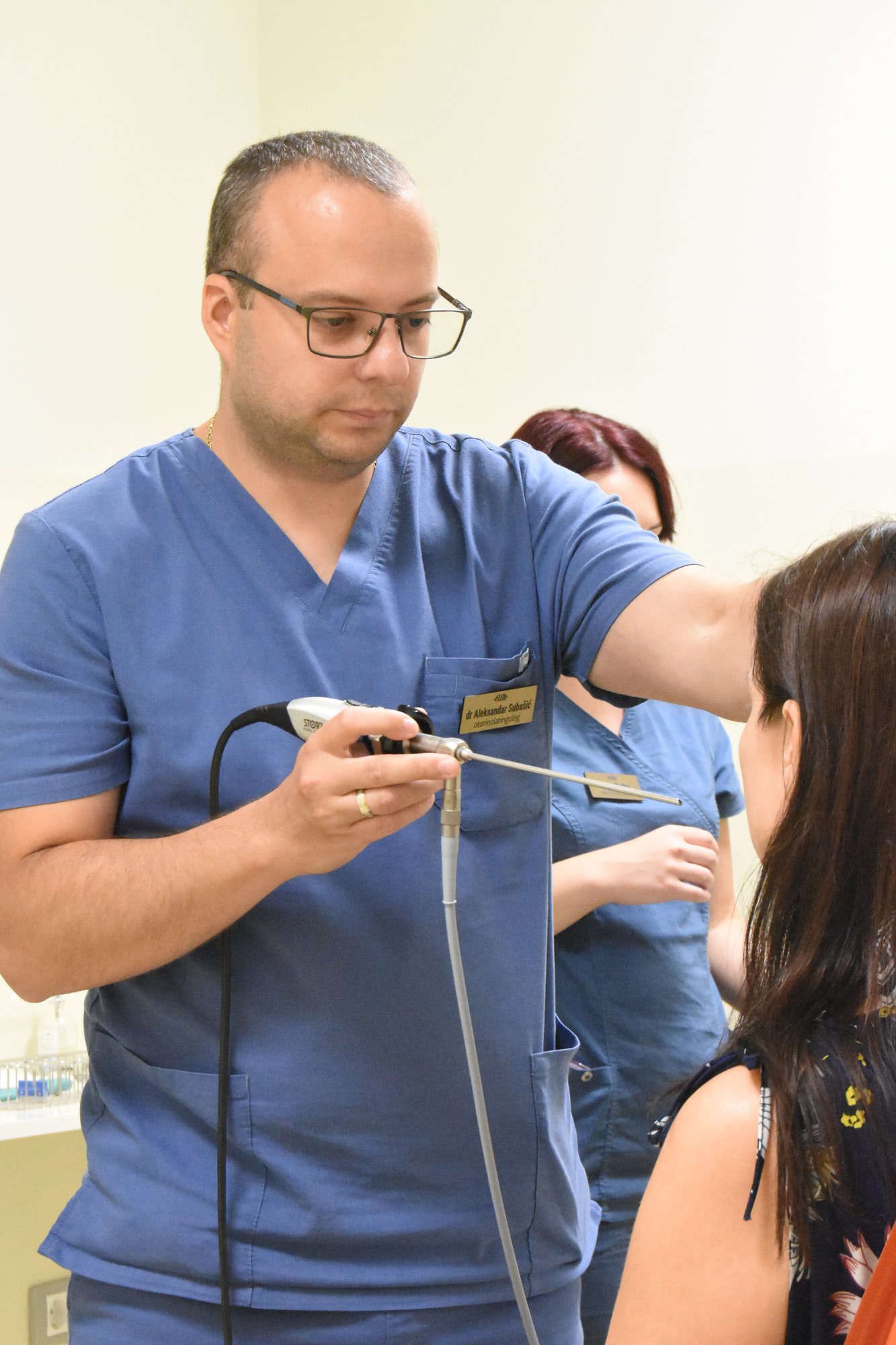
Hoarseness lasting more than two weeks is not an ordinary thing — the larynx should always be examined. The endoscopic exam at our clinic clearly shows what is happening with the vocal cords, painlessly and without preparation.
Endoscopic
laryngoscopy
HD video
recording of findings
23 years
of ENT practice
Three ENT
specialists
When your voice becomes a symptom
The voice changes for many reasons — from a simple cold-related laryngitis to acid reflux, vocal-cord nodules, polyps, and more serious conditions that require further treatment. A change in tone, volume, or quality of the voice lasting more than 14 days is a reason to have the larynx examined.
Voice
- Hoarseness lasting more than 2 weeks
- Voice that fades by the end of the day
- Whispery, raspy, or strained voice
- Change in pitch or tone
- Voice “breaks” while speaking
Throat & swallowing
- Sensation of a “lump” or foreign body in the throat
- Difficulty swallowing or pain on swallowing
- Frequent throat clearing
- Dry cough without a cold
- Burning behind the sternum (reflux)
Red flags
- Hoarseness more than 3 weeks in smokers
- Blood in saliva
- Neck lump together with a voice change
- Difficulty breathing along with hoarseness
- Unexplained weight loss
Laryngeal endoscopy
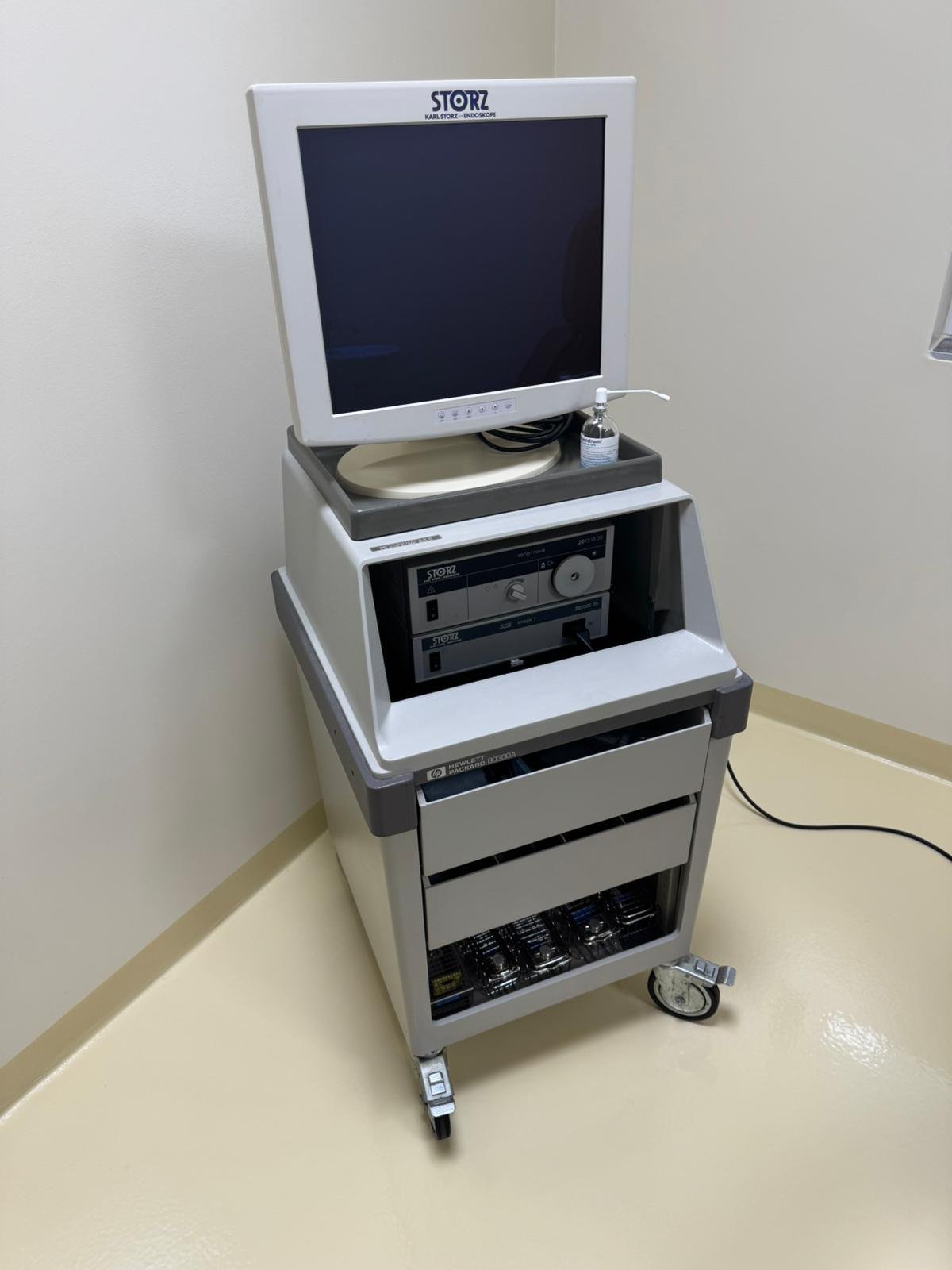
HD endoscopy tower — everything visible, findings recorded
With a thin flexible endoscope through the nose, or a rigid laryngoscope through the mouth — the approach is chosen based on the patient and findings. The image is displayed in real time on the monitor; HD video and photographs are recorded, so the patient can see what’s happening with the vocal cords.
- Vocal cord status — mobility, symmetry, mucosal appearance
- Lesions — nodules, polyps, cysts, granulomas, leukoplakia
- Function during speech — the patient speaks while the endoscope records
- Recording — the patient can receive a copy of the findings
Common conditions seen on examination
Most patients with hoarseness have one of these conditions — and most resolve without surgery.
Acute laryngitis
Vocal cord inflammation after a cold or voice overuse. Typically resolves in 5–10 days with voice rest and treatment.
Reflux laryngitis (LPR)
Stomach acid reaches the larynx and irritates the mucosa. Often without typical “heartburn” — just hoarseness, cough, and a lump-in-throat feeling.
Nodules & polyps
A consequence of vocal overuse in singers, teachers, and professional voice users. Often resolved with voice therapy; sometimes requiring laryngeal microsurgery.
Suspicious lesions
Leukoplakia, granulomas, asymmetric vocal-cord motion — for suspicious lesions, we refer for biopsy and further treatment with a clear plan for next steps.
Voice professionals
Your voice is your tool — protect it
Teachers, lecturers, lawyers, singers, broadcasters, clergy, coaches — anyone using their voice professionally is in a higher-risk group, and their examination is treated with special care.
Detailed examination
ENT and endoscopic laryngeal examination.
Recovery plan
Voice exercises, hydration, vocal hygiene rules, voice rest period — concrete recommendations tailored to your profession.
Follow-up exams
Periodic exams for early detection of changes before they begin to affect your career. Recordings are kept for comparison.
What a visit with us looks like
1
Conversation & history
We talk about when the hoarseness started, what makes it worse, whether you use your voice professionally, whether you have reflux symptoms, and whether you smoke.
2
Endoscopic exam
Endoscope through the nose or mouth, image on the monitor, takes 3–5 minutes. The patient can watch alongside the physician.
3
Findings, plan, treatment
A detailed explanation of what was seen, treatment plan, and recommendations. The patient receives a written report and, on request, a recording.
Frequently asked questions
When is it time to have a hoarse voice examined?
The “two-week rule” — hoarseness lasting more than 14 days without an obvious cause (cold, voice overuse) is an indication for an endoscopic exam. If you are a smoker, the threshold is even shorter — see us after 7–10 days.
Is the laryngeal endoscopy painful?
No. Before passing the flexible endoscope through the nose, a local anesthetic spray and decongestant are used. The exam lasts a few minutes. A minority of patients feel mild tingling in the nose and a swallowing reflex — all normal and transient.
Is hoarseness a sign of cancer?
Most often, no. Most hoarseness has a benign cause (laryngitis, reflux, nodules). But in smokers, heavy drinkers, and patients with persistent hoarseness — an endoscopic exam is the only way to reliably rule out laryngeal carcinoma. Early detection of laryngeal cancer has an excellent prognosis.
I have reflux. Is that the cause of my voice change?
Very likely. “Silent reflux” — laryngopharyngeal reflux (LPR) — is a common cause of hoarseness, cough, lump-in-throat sensation, and voice change. The endoscopic finding shows a characteristic red and edematous mucosa at the back of the larynx. Treatment is a combination of medications, diet, and sleep hygiene.
I’m a singer — how do I care for my voice long-term?
Three pillars: hydration (plenty of water, not coffee and alcohol), warming up the voice before performances, and rest after intense use. Periodic check-ups (1× per year for professional singers) help detect nodules or polyps before they become a serious problem.
Can I get a recording of my exam?
Yes. HD video and photographs from the endoscopic exam can be saved to a USB drive or sent by email. Useful for second opinions, for comparison with later exams, or when we refer you for further treatment at another institution.
Hoarse for more than 2 weeks? Schedule a consultation
Endoscopic exam of the larynx, clear diagnosis, treatment plan — all in a single visit.