
Aesthetic surgery
Surgical aesthetic procedures
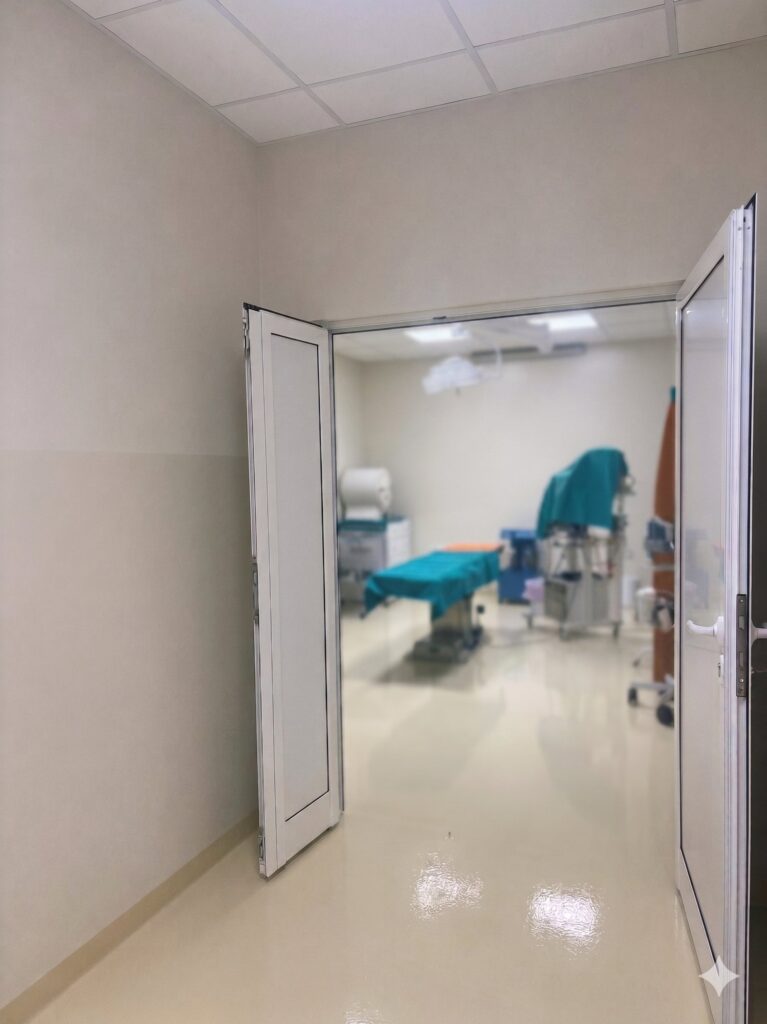
Otoplasty, blepharoplasty, skin lesion removal — all in our own operating room, with a pediatric anesthesiologist and a comfortable on-site recovery suite. Facial anatomy is our ENT specialty.
Our own
operating room
Pediatric
anesthesiologist
Recovery
suite
23 years
of ENT practice
ENT facial surgery — our daily work
Otorhinolaryngology is a surgical specialty whose everyday work involves the face and neck — the ear, nose, paranasal sinuses, larynx, and neck. ENT specialists operate in the same anatomic space where aesthetic facial procedures are performed. Combining functional and aesthetic surgery is natural for us, not an add-on.
Otoplasty
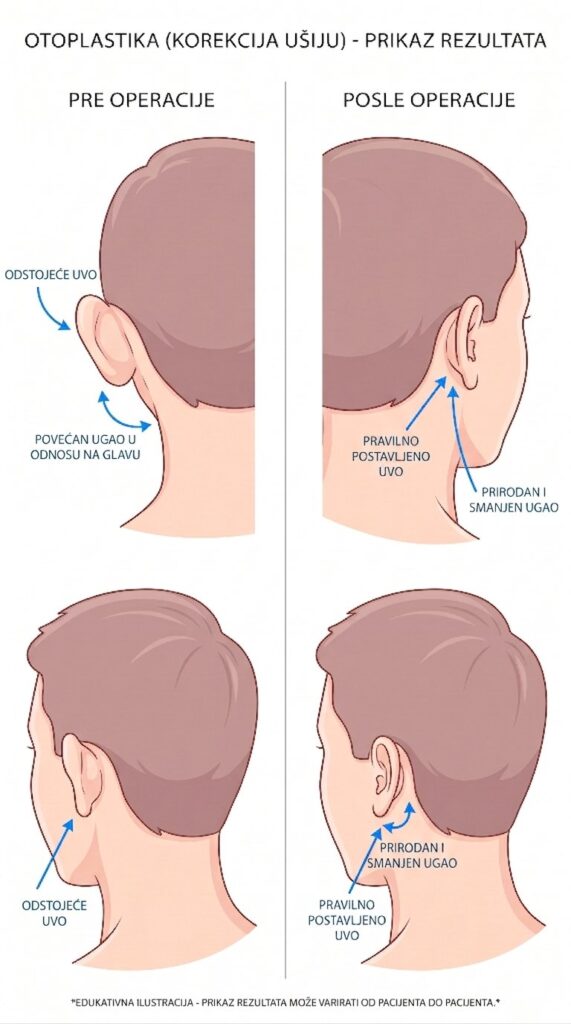
Correction of the position and shape of the auricles — most often “prominent ears”. A permanent result, a small incision behind the ear, quick recovery. Suitable for children from about age 6.
Blepharoplasty
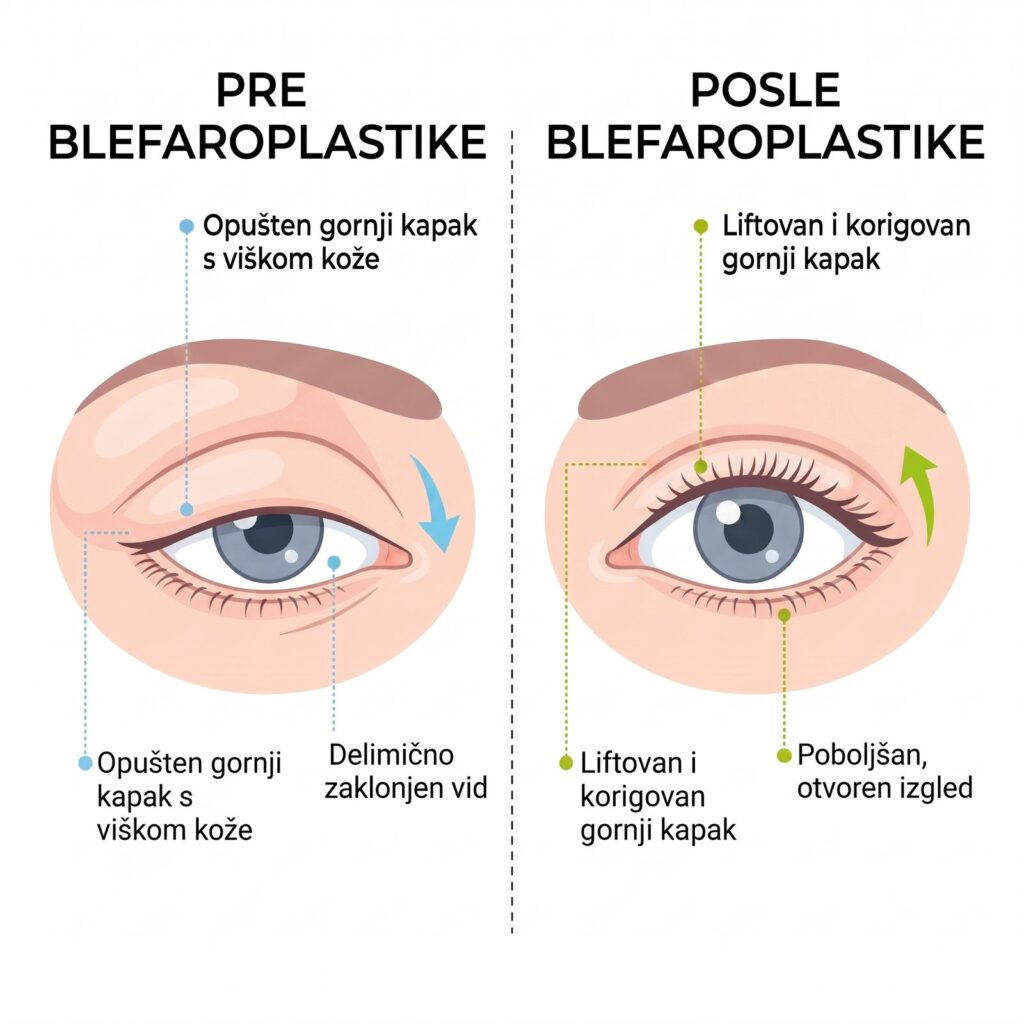
Correction of excess skin on the upper eyelids — refreshes the gaze and opens the eyes. Often with a functional benefit (reduced visual field from drooping eyelid skin).
Skin lesion removal
Moles, fibromas, papillomas, xanthelasma, cysts, lipomas, and other benign skin lesions of the face and body — with mandatory histopathology.
Otoplasty
Correcting ear position and shape
Otoplasty corrects protruding (“prominent”) ears through a small incision behind the auricle — the natural folds of the ear are reshaped and secured in the desired position. The result is permanent, and the scar is virtually invisible because it sits on the back of the ear.
- Procedure length — 1–3 hours, general or local anesthesia (local optional in adults)
- Patients — from around age 6 onward
- Recovery — head bandage for 10 days, return to normal activity in 2 weeks
- Sports — contact sports after 6 weeks
Blepharoplasty
Correction of excess upper eyelid skin
With age, the upper eyelids become heavy and droop over the reflective portion of the eye. Blepharoplasty removes excess skin and, when needed, fat tissue — the gaze opens up and looks fresher, without a “done” appearance.
- Upper eyelids — the scar sits in the natural eyelid crease and is virtually invisible
- Functional benefit — in significant ptosis, part of the lost visual field is restored
- Recovery — swelling 7–10 days, bruising may last up to 2 weeks, sutures removed at 5–7 days
Skin lesion removal
Moles, fibromas, cysts — removal with histopathology
Skin lesions that bother you visually, are exposed to friction, or change over time — we remove them in sterile clinic conditions, with a minimal scar. Every removed lesion is sent for histopathologic examination — that’s the standard of modern medicine and the only reliable way to confirm the nature of a lesion.
- Moles (nevi) — for aesthetic reasons or when exposed to friction
- Fibromas & papillomas — neck, armpit, eyelids
- Xanthelasma — yellow plaque-like lesions around the eyes
- Cysts & lipomas — subcutaneous lumps, removed in full
- Seborrheic keratoses, hemangiomas, common warts
The method depends on the lesion — surgical excision or electrocautery. We decide together at the consultation.
The ABCDE rule — when to see a doctor urgently
A mole that meets any of these criteria warrants prompt evaluation:
- A — Asymmetry (one half doesn’t match the other)
- B — Border (jagged, uneven edges)
- C — Color (multiple colors, especially black and blue)
- D — Diameter (larger than 6 mm)
- E — Evolving (changing — growing, bleeding, itching)
Anesthesia
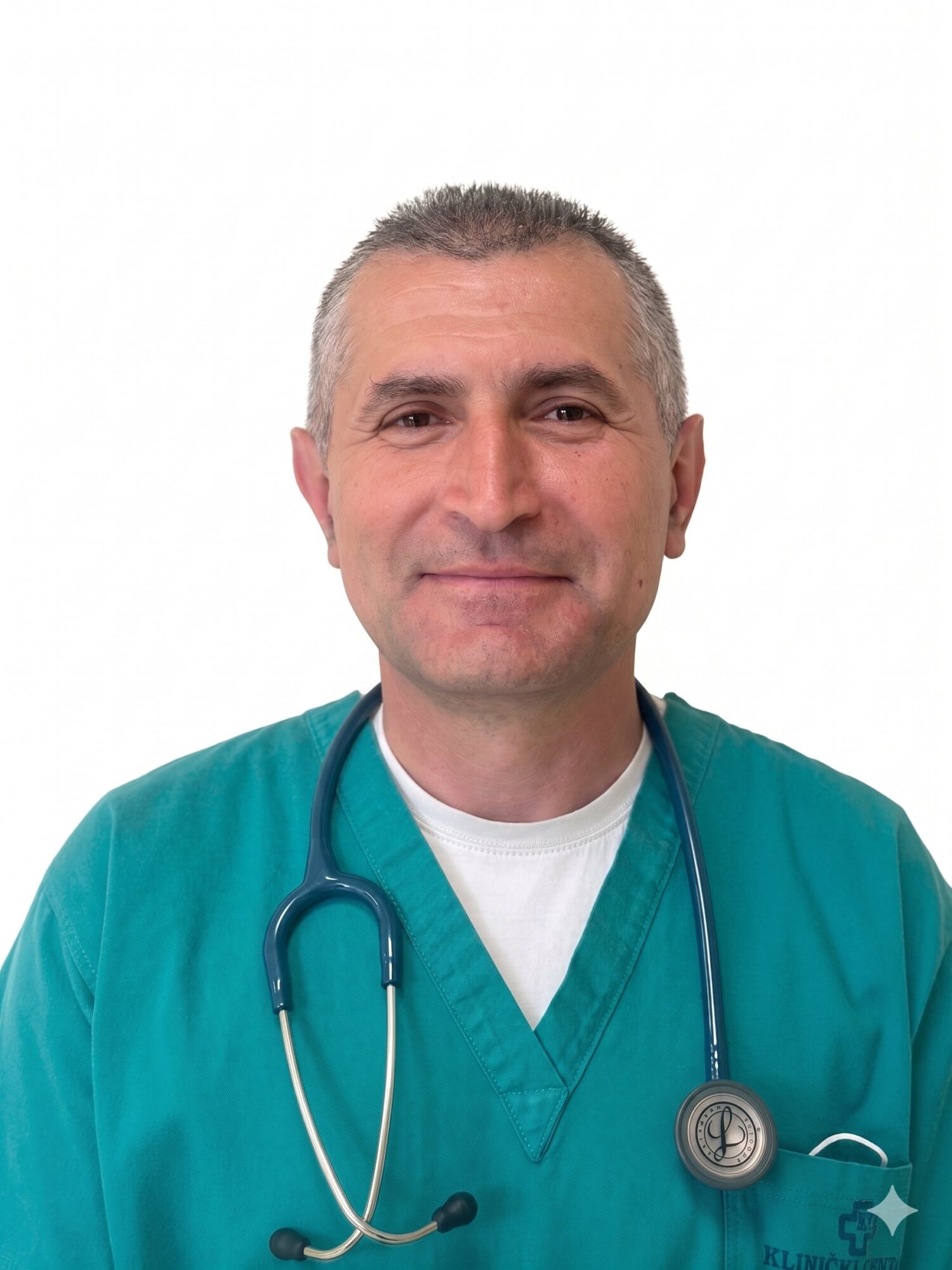
Dr. Zoran Gavrić
Anesthesiologist · subspecialist in pediatric anesthesia
Dr. Gavrić is our anesthesiologist for every surgical procedure. Each aesthetic surgical case begins with a preoperative risk assessment and a conversation with the anesthesiologist — we don’t improvise dosing or monitoring.
- Before surgery — examination, medical history, ECG and labs as indicated, clear written instructions
- During the procedure — continuous monitoring of vital signs, tailored anesthesia
- After surgery — supervised recovery in our on-site suite
From consultation to recovery
1
Consultation
Conversation about your goal, anatomic assessment, clear description of the procedure, realistic expectations, transparent pricing and scheduling.
2
Preoperative workup
Anesthesiology consultation, ECG and labs as indicated, written instructions, a list of medications to pause.
3
The procedure
Surgery under general anesthesia with the anesthesiologist present throughout. Duration depends on the procedure (1–4 hours).
4
Recovery & follow-up
Recovery suite after the procedure, discharge when everything is stable, scheduled follow-up visits until full healing.
Frequently asked questions
At what age can a child have otoplasty?
Ear cartilage finishes its development around age 5–6, which is usually the earliest age for otoplasty. Many surgeons recommend doing it before the child starts school to avoid the emotional impact of teasing. In adolescents and adults there is no upper age limit.
Are scars visible afterward?
Incisions are carefully planned — for otoplasty behind the ear (hidden), for blepharoplasty in the natural eyelid crease, and for skin-lesion removal based on the lesion type and Langer’s lines. After 6–12 months the scars are usually very discreet.
What’s included in the surgery price?
The price typically covers the procedure itself, general or local anesthesia, medications during your stay, recovery in our suite, a written discharge note, and the follow-up schedule. Specific line items are always provided at the consultation before you sign consent.
How long should I be off work?
Otoplasty — 7–10 days, after which you can return to office work. Blepharoplasty — 10–14 days because of swelling and bruising. Skin-lesion removal — shorter recovery, usually 5–10 days depending on the method and size. The specific plan depends on the individual case.
Is general anesthesia required?
Blepharoplasty is usually performed under local anesthesia, but general anesthesia is also possible if the patient wishes and medical factors allow. For otoplasty in adults, local anesthesia is also an option — chosen at the consultation based on patient preference and medical factors. In children, general anesthesia is always used. Skin-lesion removal is generally performed under local anesthesia.
Does every removed mole have to go to pathology?
Yes. Without exception — every skin lesion we remove is sent for histopathologic examination. That is the standard of modern medicine and the only way to reliably confirm the nature of the lesion. You receive the report in writing and it stays in your medical record. Safety over assumption.
Can I get a second opinion before deciding?
Absolutely. Aesthetic surgery is not a decision made under pressure — we recommend hearing at least two opinions, especially for more complex cases. Our clinic has three ENT specialists, so a second opinion can be obtained from a colleague in the same visit if you wish.
A consultation before any decision
An examination, a clear description of the procedure, a realistic recovery plan, and transparent pricing — before anything is decided.