
Nasal breathing & sinuses
Difficulty breathing through the nose and chronic sinusitis
A blocked nose that doesn’t clear with nasal drops, sinus headaches, snoring and poor sleep — often it isn’t “a cold that lingers.” A nasal endoscopy shows clearly what’s going on.
Endoscopic
nasal examination
Our own
operating room
23 years
of ENT practice
Three ENT
specialists
Why nasal breathing is impaired
The cause is rarely a single one. Most often it’s a combination — a deviated septum, enlarged turbinates, polyps, chronic mucosal inflammation, or allergy. A proper diagnosis starts with an endoscopic exam and, when needed, a sinus CT scan.
Deviated nasal septum
A crooked septum narrows the airflow — usually on one side. Often related to childhood injuries or growth during puberty. Medications don’t change the anatomy.
Turbinate hypertrophy
The inferior turbinates enlarge — most often due to chronic rhinitis or allergy. Result: persistent congestion, especially when lying down, and poor sleep.
Chronic sinusitis
Inflammation of the sinus lining lasting more than 12 weeks — with facial pressure, purulent secretions, headache. It doesn’t always respond to antibiotics.
Nasal polyposis
Soft mucosal growths that develop from the sinuses into the nose. Often associated with allergy, asthma, or aspirin intolerance. They tend to return without proper treatment.
When it’s time for an ENT consultation
Breathing & nose
- Persistent nasal congestion — one or both sides
- Mouth breathing during the day or at night
- Mucous nasal discharge lasting more than 4 weeks
- Reduced or absent sense of smell
Sinuses & face
- Pressure or pain in the cheekbones, forehead, or bridge of the nose
- Headache that worsens when bending forward
- Frequent acute sinus infections (≥4 per year)
- Postnasal drip
Sleep & quality of life
- Snoring and poor sleep due to nasal congestion
- Dry mouth in the morning, sore throat
- Reduced exercise tolerance, fatiguing quickly
- Frequent middle-ear infections from nasal blockage
Nasal endoscopy
An endoscope shows what a routine exam cannot see
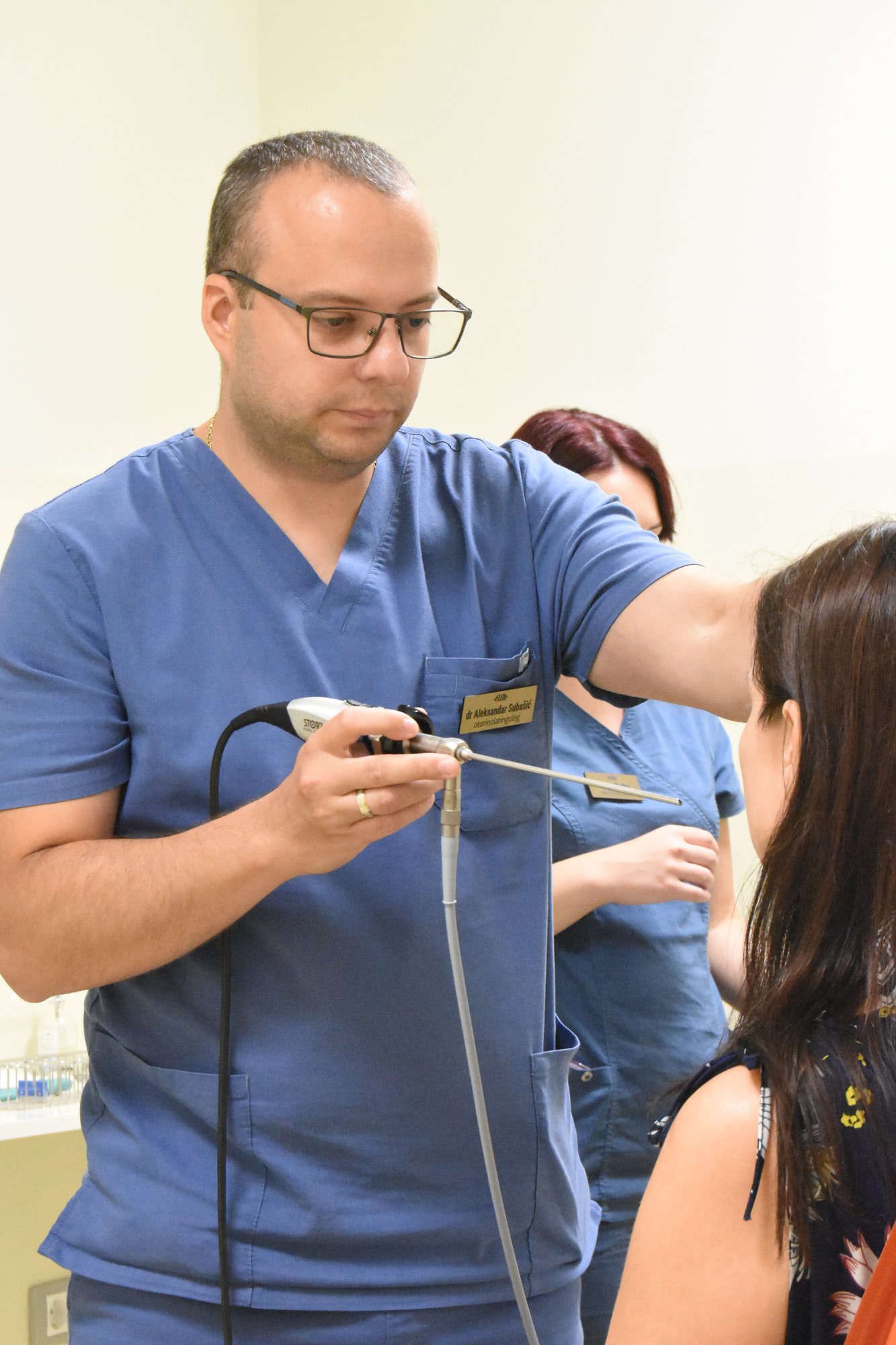
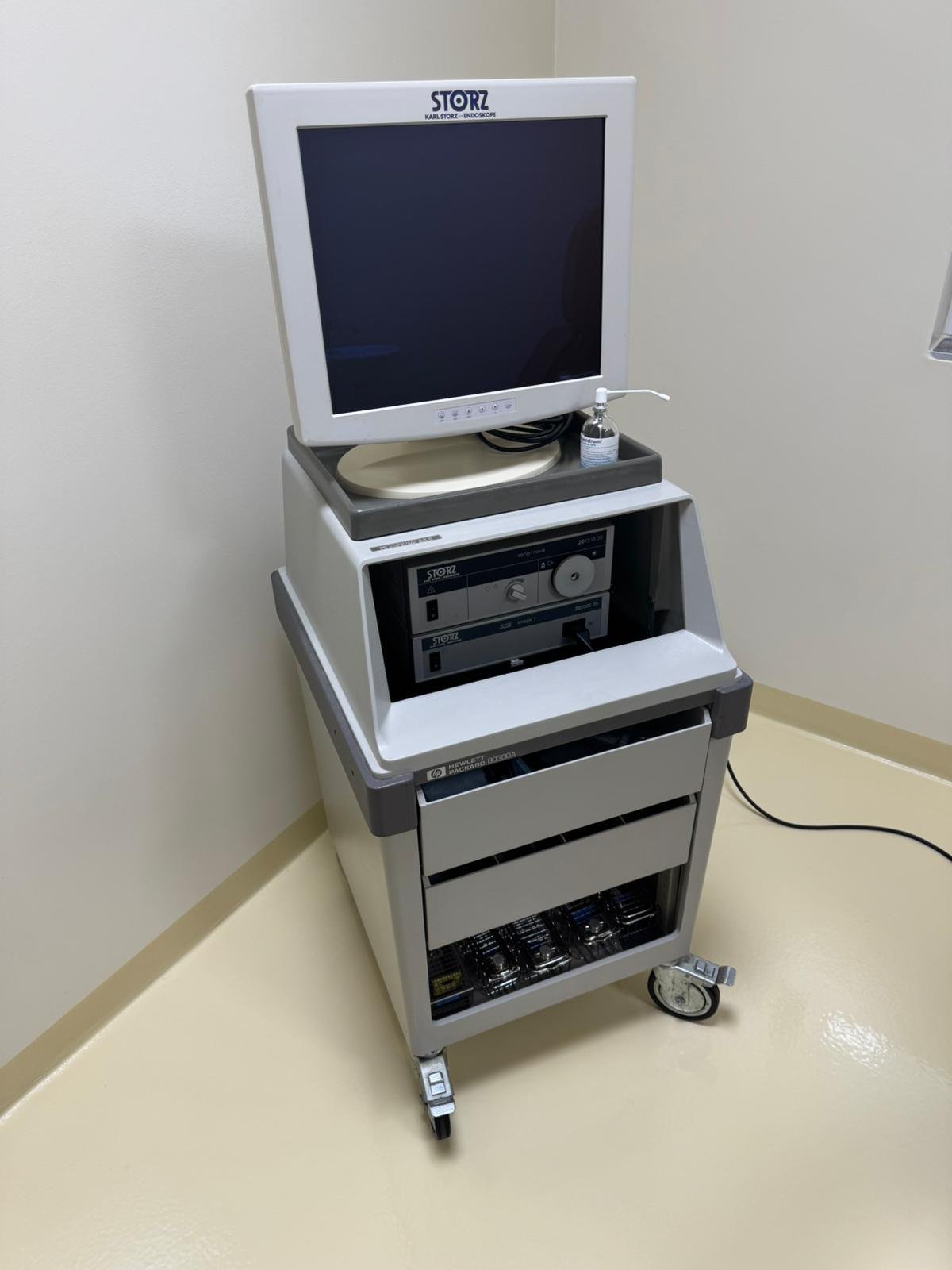
Using a thin, flexible endoscope passed through the nose, we examine every level of the nasal cavity — the septum, the inferior and middle turbinates, the middle meatus (where the sinuses drain), and the nasopharynx. The image is displayed in real time on a monitor and can be recorded on request.
- Septum — degree and direction of deviation, spurs, contact with the turbinates
- Turbinates — size, appearance of the mucosa, response to decongestant
- Polyps & secretions — direct view of the middle meatus
- Adenoids — in children and young adults, a possible cause
Imaging diagnostics
Sinus CT — when and why
An endoscopy shows the mucosa and the sinus openings but cannot show what’s inside the sinus cavity. A sinus CT (computed tomography) provides precise sections in all three planes and reveals:
- The status of all sinuses — maxillary, frontal, ethmoid, sphenoid
- Anatomic variations that predispose to inflammation
- Distribution of polyps, fungal deposits, odontogenic causes
- A map for surgical planning — FESS is not performed without a CT
The sinus CT is performed as needed at a radiology facility; we refer you, then interpret the findings in the context of your symptoms and the endoscopic examination.

Treatment plan
Conservative care before surgical intervention
Medications & rinses
Topical corticosteroid sprays, saline or hypertonic nasal rinses, antihistamines for allergy, targeted antibiotics only when there is a clear bacterial indication.
Allergy workup
Allergy is often the underlying driver of chronic rhinitis and polyposis. We perform skin allergy testing when indicated, refer the patient for immunotherapy with an allergist, and manage the ENT side of treatment.
When surgery is considered
Septoplasty for significant deviation, turbinate reduction for hypertrophy, FESS (functional endoscopic sinus surgery) for chronic sinusitis and polyposis unresponsive to medical therapy.
What a visit with us looks like
1
Conversation & history
When did it start, what triggers symptoms, any history of nasal trauma, family history of allergy, prior treatments and test results.
2
Endoscopic examination
Local anesthetic spray, decongestant, then a flexible endoscope through the nose. You watch the findings on the monitor together with the doctor.
3
Findings, plan, follow-up
Written report, treatment plan, referral for CT or allergy as needed, scheduled follow-up. No rush, with a clear next step.

Recovery suite
A comfortable recovery after surgery
After nasal and sinus surgery we monitor the patient until the anesthesia fully wears off and the first hour of recovery passes without issues. The suite has a bed, space for a companion, anesthesia and nursing staff on hand, with quiet and privacy. Discharge only when we are confident everything is in order.
Frequently asked questions
Is a CT scan required before the consultation?
No. You come first for a conversation and endoscopic exam — often the problem and the need (or not) for a CT scan become clear there. We don’t order CT scans by default — that would be unnecessary radiation exposure.
Is the endoscopic exam painful?
No. Before the exam we apply a local anesthetic spray and a decongestant to prepare the nasal mucosa. The endoscope is thin and flexible, passing gently through the nasal passage. Most patients feel no discomfort at all.
I have a significant septal deviation. Is surgery the only option?
Conservative therapy (sprays, rinses, antihistamines) can substantially ease the symptoms, but it does not change the anatomy of the septum. If the problem seriously affects breathing, sleep, exercise, or work — septoplasty is a solution with a long-lasting effect. The decision is made after consultation, not at the first visit.
Antibiotics for sinusitis — yes or no?
Most acute sinusitis is viral and does not require antibiotics. Antibiotics are indicated when symptoms last longer than 10 days, when symptoms worsen after initial improvement (“double sickening”), or with severe local and systemic signs. Chronic sinusitis requires a different approach — antibiotics are not the cornerstone of treatment.
Can I use a nasal spray every day?
It depends on the type. Topical corticosteroid sprays (mometasone, fluticasone) are safe for long-term use under medical supervision. Decongestant sprays (oxymetazoline, xylometazoline) must not be used for more than 5–7 days — they cause dependence and rhinitis medicamentosa (“the nose blocks again as soon as the spray wears off”).
No pain — could it still be chronic sinusitis?
Yes. The classic “sinus pain” is more typical of acute sinusitis. The chronic form mainly presents with nasal congestion, postnasal drip, reduced sense of smell, and a feeling of facial fullness — pain is not always present. An endoscopic exam then provides a clear picture of the mucosa.
Blocked nose for more than 4 weeks? It’s time for a consultation
Endoscopic exam, clear diagnosis, treatment plan — all in a single visit.