

Aesthetic medicine
Aesthetic and anti-aging treatments in a surgeon’s hands
Botulinum toxin, hyaluronic acid fillers, PRP, PDRN, mesotherapy — every treatment in a sterile clinic environment, performed by a physician who knows facial anatomy down to the finest detail.
A physician
performs the treatment
ENT
facial anatomy
Sterile
clinic environment
Original
products
Why it matters who performs the treatment
Botox, fillers, and mesotherapy work beneath the skin — exactly where facial nerves, blood vessels, and muscles run. A few millimeters off can cause eyelid ptosis, an asymmetric smile, bruising that lasts weeks, or vascular complications. ENT specialists operate in that same anatomic space every day — it’s not an “add-on” to our training, it’s our daily work.
Botulinum toxin
Expression lines — forehead, between the brows, around the eyes. A discreet, natural-looking result that lasts 4–6 months. Subtle or more pronounced — your choice.
Hyaluronic acid fillers
Volume, contour, hydration — lips, cheekbones, chin, under-eye area, jawline definition. Targeted formulations for each facial zone, with results lasting 9–18 months.
PRP & PDRN
Regenerative treatments — PRP from your own blood, PDRN from polynucleotides. They stimulate skin quality, improve under-eye area and capillaries, and strengthen hair. Multiple sessions for a lasting result.
Mesotherapy
Vitamin and hyaluronic acid cocktail injected into the skin — hydration, glow, softer fine lines. Typically a series of 3–4 treatments at 2–4 week intervals, ideal before summer or a special event.
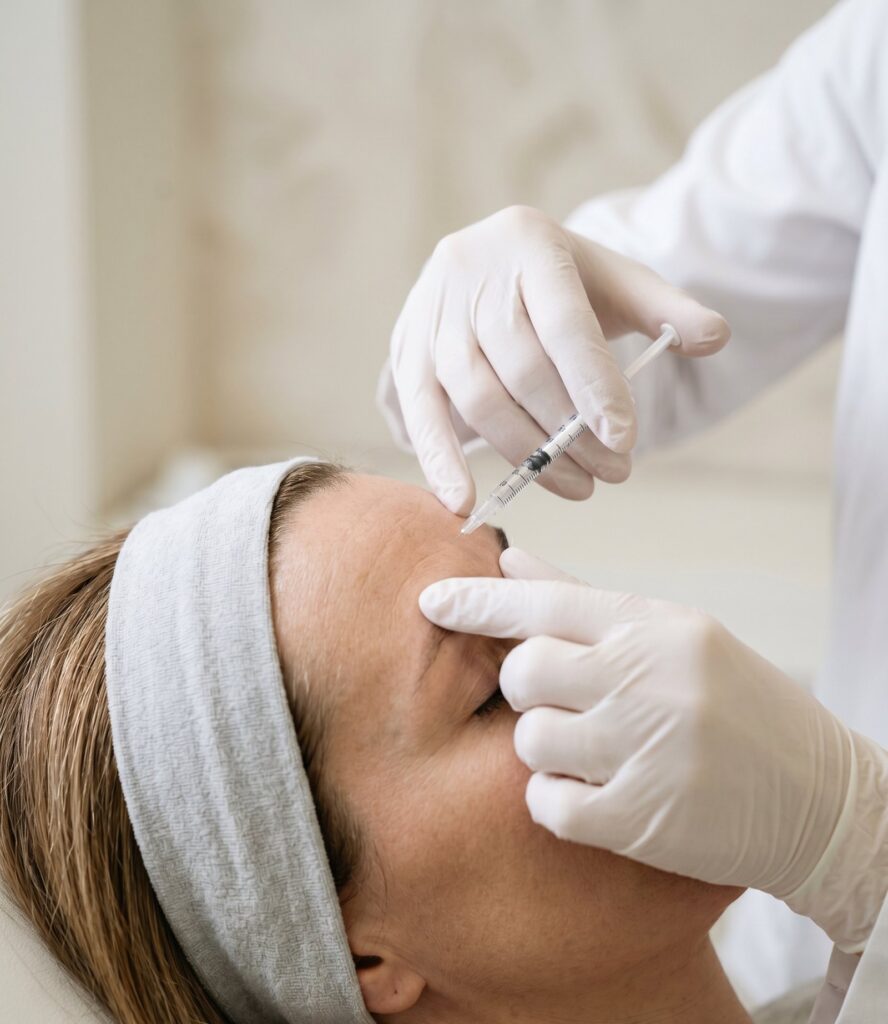
Botulinum toxin
Subtle expression-line softening — no “frozen” look
Botulinum toxin works by relaxing specific facial muscles — when dosing is right, the face stays expressive while the lines visibly soften. The goal isn’t to look “different” — it’s to look fresher and more rested.
- Forehead lines — horizontal lines when raising the eyebrows
- Glabella — “11” between the brows (frown lines)
- Crow’s feet — lines at the outer corners of the eyes when smiling
- Bunny lines — lines on the sides of the nose, especially with a pronounced smile
- On indication — neck, lower face, axillary hyperhidrosis (excessive sweating)
Effect appears in 5–10 days and lasts 4–6 months. Repeating 2–3 times a year maintains the result.
Hyaluronic acid fillers
Volume, contour, and hydration — targeted zones
Different facial zones need different formulations — denser fillers for cheekbones and chin, softer ones for lips and the under-eye area. The right choice is the difference between a natural and a visibly “done” look.
Lips
Volume, hydration, or border definition — different amounts and techniques for each goal. Traditionally step-by-step for a natural result.
Cheekbones & chin
Restoring the volume lost with aging, lifting the midface, defining the jawline — structural fillers for a stable, long-lasting result.
Under-eye area (tear trough)
Tear-trough correction — filling the hollow under the eye that creates a tired appearance. The thinnest filler, exceptionally careful technique, anatomy assessment before each treatment.
Hyaluronic acid is biocompatible and, if needed, can be dissolved with an enzyme antidote — an important safety feature.
Regenerative aesthetics
PRP and PDRN — amplifying what your body already does
PRP (Platelet-Rich Plasma) is isolated from your own blood — concentrated platelets rich in growth factors are reintroduced into the skin to stimulate regeneration. PDRN (polynucleotides) is an extract derived from salmon gonad tissue with documented regenerative properties, especially valuable for sensitive skin, the under-eye area, and capillaries.
- Face — skin quality, fine lines, even tone, radiance
- Neck and décolleté — fine lines, skin texture, firmness
- Under-eye area — the thin skin beneath the eye — PDRN is particularly valued here
- Scalp — thinning hair, hair loss, weakened growth — PRP is well documented in clinical studies
Typically a series of 3 treatments at 4-week intervals, followed by 1–2 maintenance treatments per year.

What a visit looks like
Consultation first — treatment after
1
Conversation & assessment
What exactly bothers you, what you want to achieve, prior experiences with treatments, medical history, current medications.
2
An honest plan
A recommendation of what actually makes sense — often that means less, not more. Honest about expectations, transparent about pricing, clear about how long the effect lasts.
3
Same-day or later treatment
Botox and fillers are often performed in the same visit if it suits you. PRP/PDRN is usually scheduled separately once the preparation is arranged in advance.
4
Follow-up visit
Two weeks later — results check, touch-up if needed, plan for follow-ups and the next treatment.
When an aesthetic treatment isn’t the right answer
Honestly: not everyone is a candidate for Botox or fillers. The consultation exists precisely for this — to tell you when no is better than yes, or to recommend a different approach.
- Pregnancy and breastfeeding
- Active skin infection or herpes at the treatment site
- Active-phase autoimmune disease
- Anticoagulant therapy (adjustment needed)
- Unrealistic expectations a procedure can’t meet
- Significant loss of structural volume that requires a different approach
- Active skin conditions that need treatment first
- Patients under 18 (except for clear medical indications)
Frequently asked questions
Will it be obvious that I had Botox?
When properly dosed — no. The goal is for your face to stay alive and expressive, with the lines just less visible. The “less first, add more if needed” approach gives the most natural result. The muscles you use for smiling and emotional expression are not targeted in aesthetic treatment.
How long do filler results last?
It depends on the formulation and zone. Lips typically 6–9 months, cheekbones and chin 12–18 months, under-eye area 9–12 months. Hyaluronic acid breaks down gradually — there’s no sudden “disappearance” of the result.
Does it hurt?
Botox — virtually painless, a few seconds per point. Fillers — special topical cream with a combination of local anesthetics for stronger, extended numbing. PRP — only a venipuncture plus a series of tiny injections. Most patients rate the discomfort far below what they expected.
Can I have Botox/fillers at 25? Or is that too early?
It depends on the goal. Preventive low-dose Botox (for pronounced expression lines) can be reasonable in younger patients. Fillers need a clearer indication — a consultation will tell you what makes sense and what doesn’t, with no pressure to proceed.
Can I have swelling or bruising afterward?
Mild swelling is expected after fillers (24–48 hours), and bruising is possible but uncommon. To minimize risk: avoid aspirin, ibuprofen, and alcohol for 48 hours before; skip strenuous exercise on the day of treatment; use cold compresses afterward. You’ll receive detailed written aftercare instructions.
What if I don’t like the filler result?
Hyaluronic acid can be dissolved with hyaluronidase — a treatment that returns the area to its original state within a few days. That’s exactly why we choose HA fillers rather than permanent ones — the safety profile is on a different level.
What’s the difference between PRP and mesotherapy?
PRP uses concentrated platelets from your own blood — rich in your body’s own growth factors. Mesotherapy is a cocktail of hyaluronic acid, vitamins, amino acids, and minerals injected into the skin. PRP is a more regenerative approach; mesotherapy is more about skin hydration and nourishment. They’re often combined within a treatment plan.
A consultation before any decision — no obligation
Tell us what you’re thinking — you’ll get an honest plan and transparent pricing. Treatment happens only when you decide.