
Tonsils & adenoids
Examination, diagnostics, and second opinion
Snoring, difficulty breathing, recurrent throat and ear infections — these often have the same origin: enlarged tonsils or adenoids. Our job is to see clearly what’s going on through examination and help parents make a calm, informed decision.
Endoscopic
adenoid exam
Audiometry
+ tympanometry
23 years
of ENT practice
Three ENT
specialists
What tonsils and adenoids are
Many parents aren’t sure of the difference — let’s start with the basics.
Tonsils
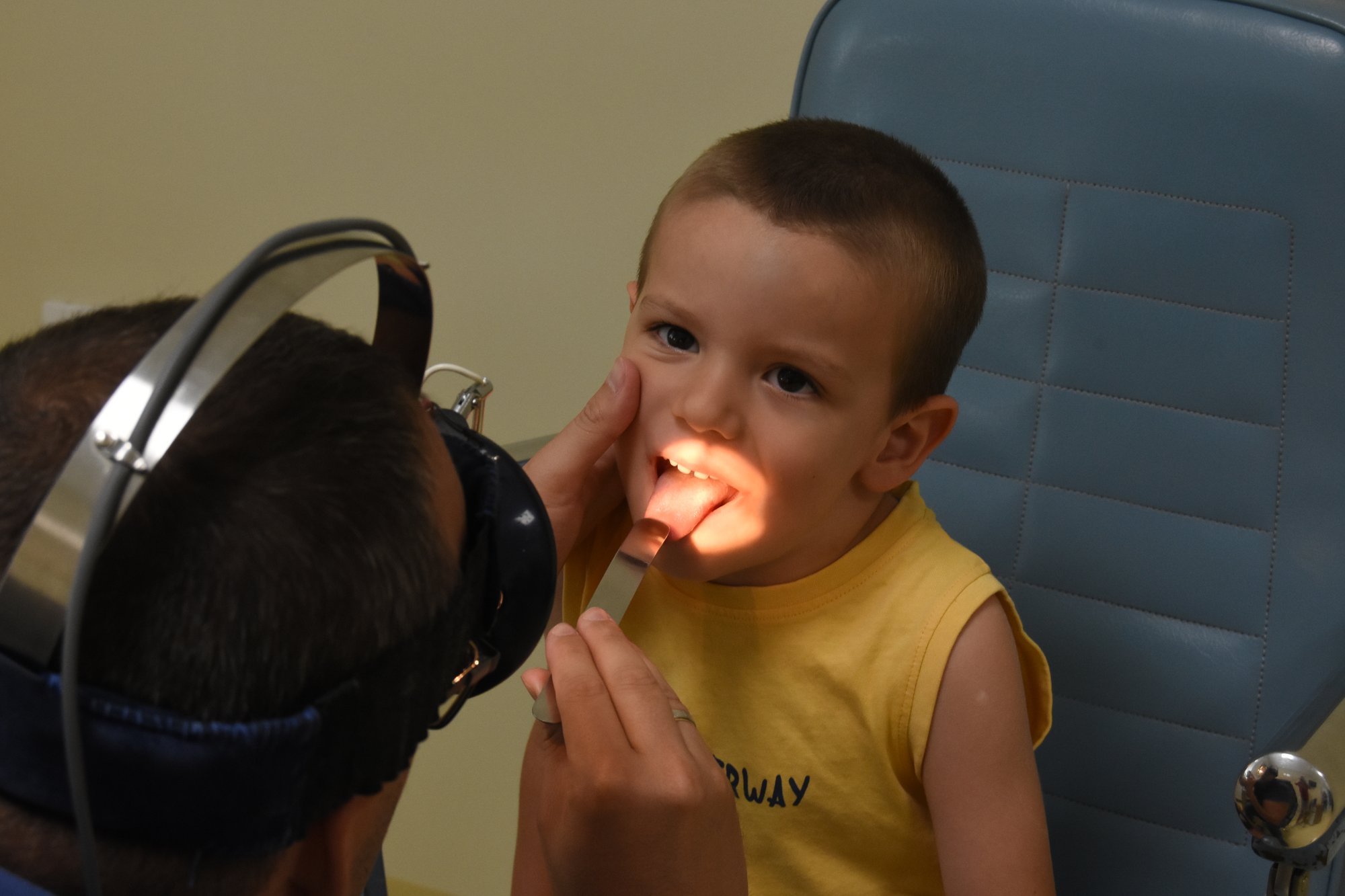
The two tonsils sit at the sides of the throat and are visible when the mouth is open. They are part of the lymphatic system and help defend against infection. In children, they often become inflamed (tonsillitis) or enlarge enough over time to interfere with breathing and swallowing.
Adenoids
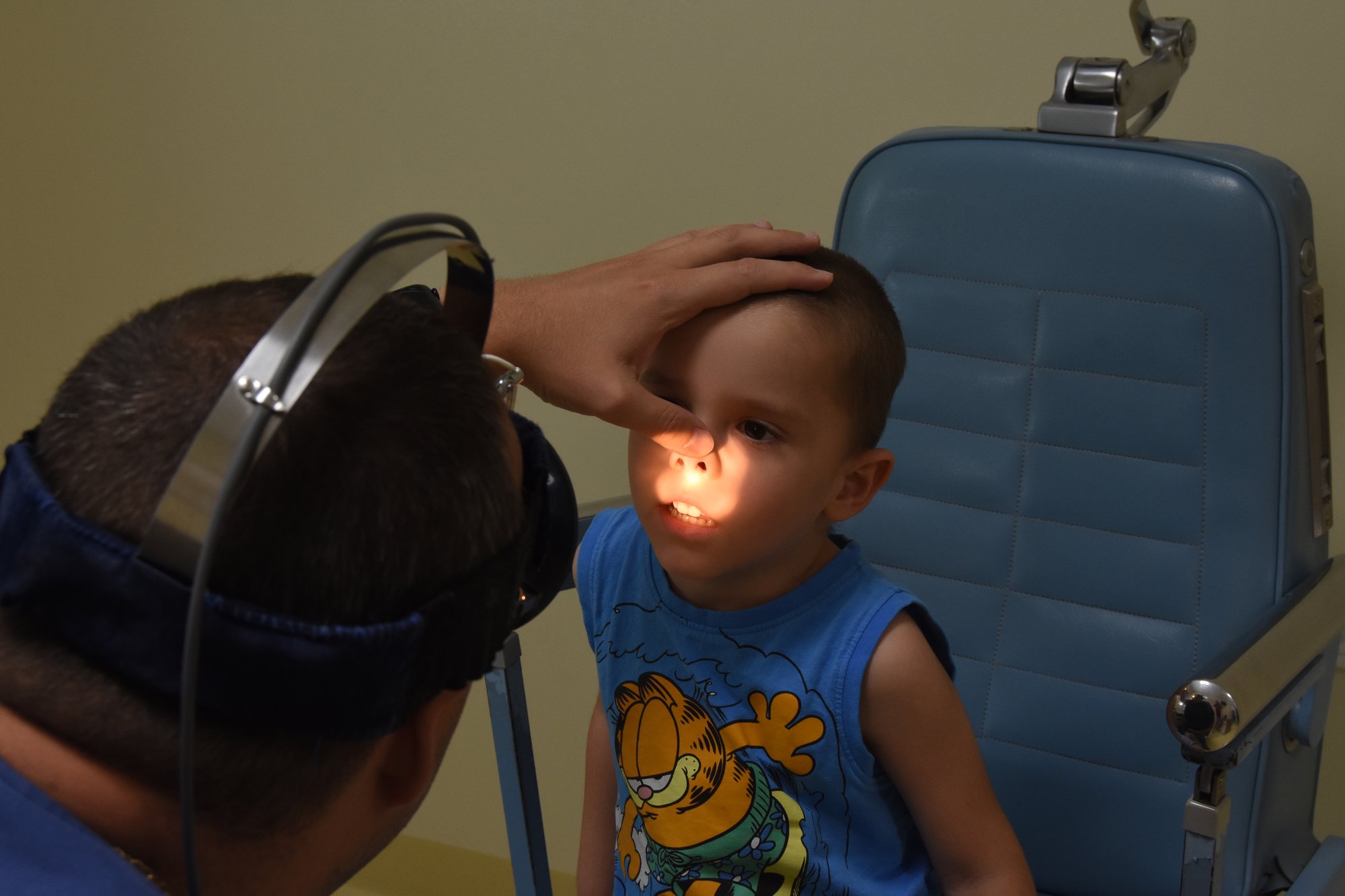
The adenoid sits behind the nose in the nasopharynx — it cannot be seen with the mouth open and is only assessed by endoscopy. The most common complaints: blocked nose, snoring, recurrent middle-ear infections with fluid accumulation.
Symptoms that warrant an examination
Breathing & sleep
- Snoring at night
- Mouth breathing during the day or at night
- Breathing pauses during sleep (apnea)
- Restless sleep, sweating, waking up tired
Infections
- Recurrent sore throats — more than 5–7 per year
- Recurrent middle-ear infections (otitis) with fluid
- Persistent nasal congestion and discharge without a cold
- Bad breath despite good hygiene
Development & behavior
- Reduced hearing — TV too loud, not responding
- Slowed speech, nasal voice
- Reduced concentration, school performance issues
- Difficulty swallowing food
Endoscopy
Endoscopic exam — direct view without X-rays
The adenoid cannot be seen with the mouth open — the only precise way to assess its size and condition is an endoscopic exam. A thin, flexible endoscope passes gently through the nose and shows the enlarged adenoid in real time on the screen — without radiation, without pain.
- Size and degree of nasopharyngeal blockage
- Mucosal status — inflammation, secretions, allergic changes
- Tonsils and throat examined in the same visit
- The parent can watch the findings in real time
Hearing
Audiometry and tympanometry — hearing assessment
An enlarged adenoid often blocks the Eustachian tubes and leads to fluid accumulation behind the eardrum — weakening hearing even when the child has no active ear infection. That’s why, alongside the endoscopic exam, we perform hearing diagnostics whenever there’s suspicion.
- Tympanometry — shows whether fluid is blocking eardrum mobility
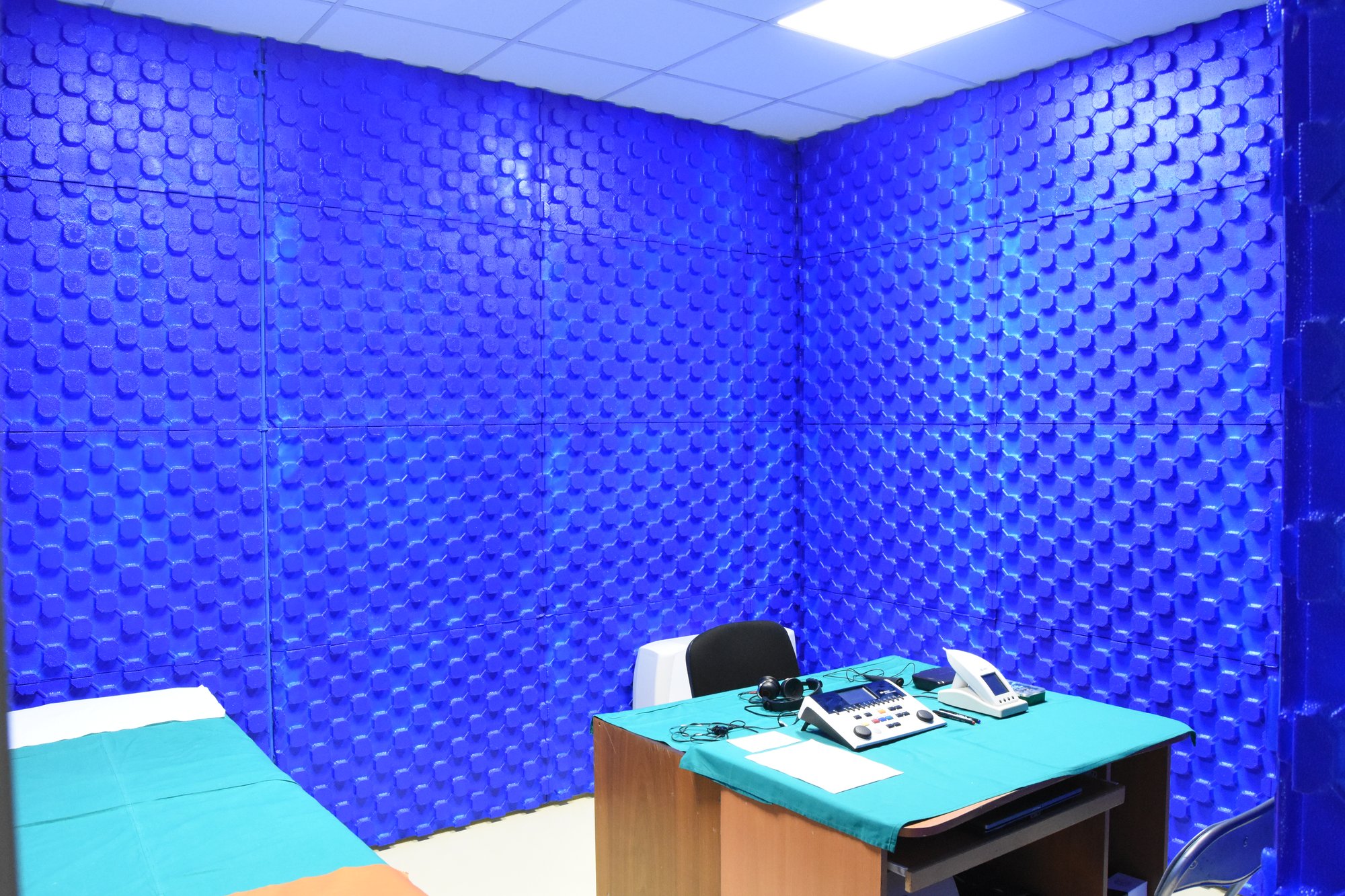
- Pure-tone audiometry — measures hearing thresholds by frequency in a soundproof booth
When surgery becomes an option
When a surgical procedure is seriously considered
Surgery is not the first step — but it is a reasonable step when conservative therapy doesn’t help or there is a clear risk to a child’s development. Either way, the decision is made based on findings, not on a single complaint.
Enlarged adenoid
When endoscopy shows a significantly enlarged adenoid alongside documented mouth breathing, snoring, recurrent middle-ear infections, or hearing loss — adenoidectomy becomes a recommended option.
Chronic tonsillitis
Tonsillectomy is considered with 5–7 or more documented infections per year, peritonsillar abscesses, or when enlarged tonsils cause significant obstructive sleep apnea in children.
Combined cases
Often both components are present at once — enlarged tonsils plus an enlarged adenoid. In that case, a combined procedure under general anesthesia is considered.
How we help at ELITE clinic
Three scenarios where we’re here for you.
1
Examination & diagnostics
Endoscopic exam of adenoid and tonsils, audiometry, tympanometry. At the end the parent receives clear findings and an explanation of what they mean.
2
Second opinion
If someone has already proposed surgery, come to us before the final decision. We thoroughly review the findings and tell you objectively whether our team would make the same recommendation.
3
Follow-up
After surgery we follow the child at check-ups — we verify hearing, breathing, and healing. The parent always has a physician available for questions.

Anesthesia for children
Dr. Zoran Gavrić
Anesthesiologist · subspecialist in pediatric anesthesia
Dr. Gavrić is our anesthesiologist. His subspecialty in pediatric anesthesia makes our operating room safe even for our youngest patients.
- Before surgery — examination, medical history, and risk assessment for every child
- During the procedure — continuous monitoring of vital signs
- After surgery — supervised recovery in our suite
- Pediatric anesthesia — safe, weight-based dosing for children with dedicated protocols
Questions parents ask most often
Does an enlarged adenoid always mean surgery?
Not automatically. Enlarged adenoids are a common finding in children. Surgery is seriously considered only when symptoms (mouth breathing, snoring, recurrent ear infections, hearing loss) last long enough and do not respond to conservative therapy.
How many sore throats per year is a threshold for tonsil surgery?
Standard medical criteria (Paradise) are 7 or more documented infections in a single year, 5 per year over two years, or 3 per year over three years. Beyond numbers, we also consider the severity of each episode and how much it affects the child’s daily life.
Can an enlarged adenoid cause hearing loss?
Yes. An enlarged adenoid blocks the Eustachian tube and prevents normal middle-ear ventilation. The result is fluid behind the eardrum (serous otitis media), which weakens hearing — often without pain. That’s why we perform tympanometry and audiometry alongside the endoscopic exam when indicated.
Is a sinus X-ray needed?
In most cases, no — an endoscopic exam gives a more precise view of the adenoid without exposing the child to radiation. A sinus X-ray is for other problems and is often unreliable for evaluating the adenoid.
Is surgery under general anesthesia safe for a small child?
Anesthesia in children is administered by Dr. Zoran Gavrić, a subspecialist in pediatric anesthesia. Doses are tailored to age and weight, and monitoring is continuous.
Should the child stop any medications before surgery?
It depends on the medication. Most routine medications are continued normally, but some (e.g., aspirin) should be paused a week before. Specific instructions are given at the anesthesiology consultation before the procedure.
How long is the recovery after surgery?
After adenoidectomy, recovery is typically 7–10 days — the child quickly returns to usual activities. After tonsillectomy, it’s somewhat longer, up to 10–14 days, with a more careful diet (soft, cold foods).
Schedule a consultation — thorough, without rush
Endoscopic exam of adenoids and tonsils, audiometry, second opinion on an existing surgical recommendation — reach us however suits you.